Hungary drops veto as EU clears path for Ukraine's final accession clusters
By Tyler Wood ·
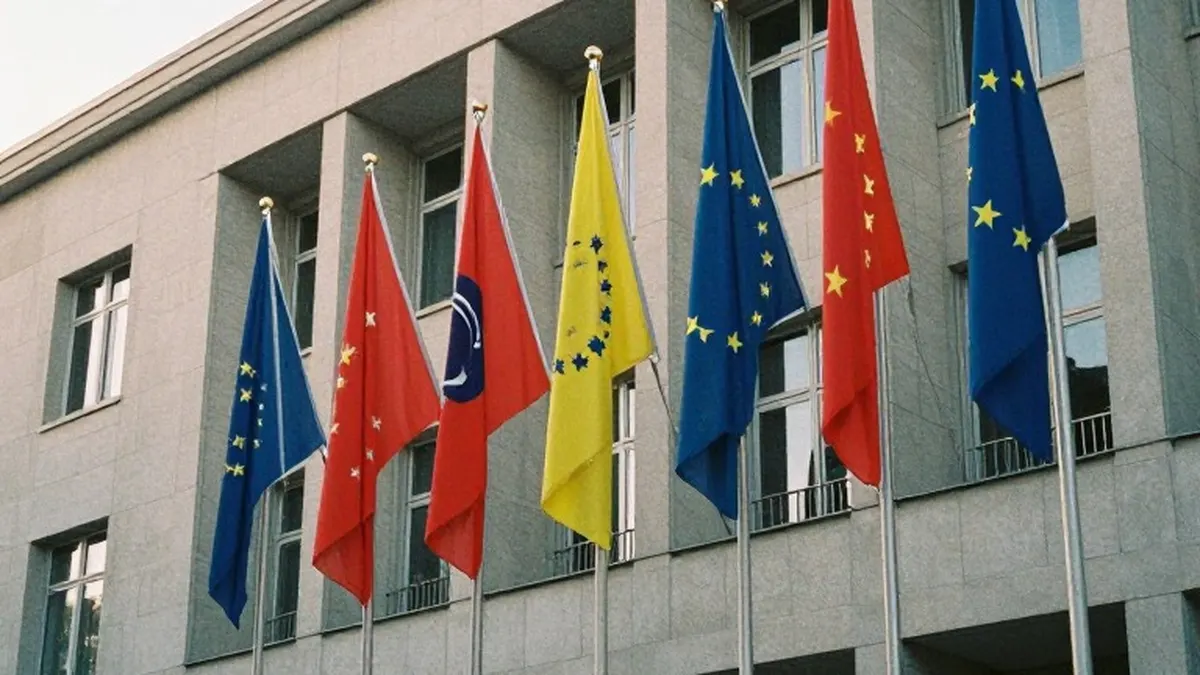
The European Union has advanced Ukraine's accession talks by approving the screening results for the final two negotiating clusters. The Committee of Permanent Representatives, known as Coreper, formally endorsed the results for Cluster 4 and Cluster 5 on Friday, 20 November 2026. This action clears the procedural hurdles for the official opening of these chapters, marking a significant step in Ukraine's path toward full EU membership.
The decision was reached after ambassadors from all member states agreed on the evaluation of Ukrainian legislation regarding the Green Agenda and Sustainable Connectivity, as well as Resources, Agriculture and Cohesion. These two clusters had previously remained the only unopened sections of the negotiation framework. Diplomatic sources in Brussels confirmed that the agreement was reached without debate, as the items were listed on the agenda as non-discussion points.
Hungary, which had repeatedly blocked the approval of these screening results, played a pivotal role in the recent development. Earlier on the morning of 20 November, Budapest signaled its willingness to move forward with the process. This shift allowed the relevant items to be added to the Coreper agenda. Previously, the Hungarian delegation had voiced objections during multiple working group meetings, including sessions held on 20 October, 27 October, 3 November, and 10 November.
The approval for Ukraine is part of a broader procedural update that also affects Moldova. Similar decisions regarding the screening results for Clusters 4 and 5 were simultaneously agreed upon for the Moldovan accession process. This parallel progression suggests a synchronized approach by the EU to handle the final stages of negotiations for both candidate countries.
Cluster 4 encompasses critical areas such as transport, energy, trans-European networks, the environment, and climate change. Cluster 5 covers agriculture, fisheries, regional policy, and budgetary provisions. By clearing these final hurdles, the EU moves closer to concluding the technical assessment phase of the accession talks for both Ukraine and Moldova.
The next procedural step involves the European Union sending official letters to Kyiv and Chisinau. These communications will invite the two countries to submit their formal negotiating positions on each of the two newly cleared clusters. Once these positions are received, the EU must prepare and agree upon its own common negotiating stances for Clusters 4 and 5.
Approval of the EU's common positions requires the unanimous consent of all member states. This requirement means that while the initial barrier has been removed, further coordination among EU capitals will be necessary before the clusters can be formally opened. The process is designed to ensure that all member states are aligned on the terms of the final negotiations.
Once the EU's common positions are agreed upon, it will be possible to hold intergovernmental conferences with Ukraine and Moldova. These conferences serve as the official venue for opening the remaining negotiating clusters. The next meeting of the EU General Affairs Council, where such conferences are typically held, is scheduled for 15 December 2026.
However, the timeline may accelerate if the necessary procedures are completed sooner. The intergovernmental conference to open the clusters could potentially take place before the December session, provided that the EU's common negotiating positions are finalized in the interim. This flexibility allows the process to move at the speed of the member states' consensus.
The recent developments follow a report sent by the European Commission to the Council of the EU on 19 November. That report assessed Moldova's fulfillment of the Interim Benchmarks Assessment Report requirements, a step that will allow Moldova to begin closing its own negotiating chapters. The simultaneous progress for both countries underscores the EU's ongoing commitment to integrating its eastern neighbors.