Shenzhen Summit: Analysis of Diplomatic Dynamics Between Trump, Xi, and Putin
Experts debate whether the recent trilateral meeting in Shenzhen represented a tactical victory for Vladimir Putin or a display of diplomatic hierarchy by China.
By Malik Popov ·
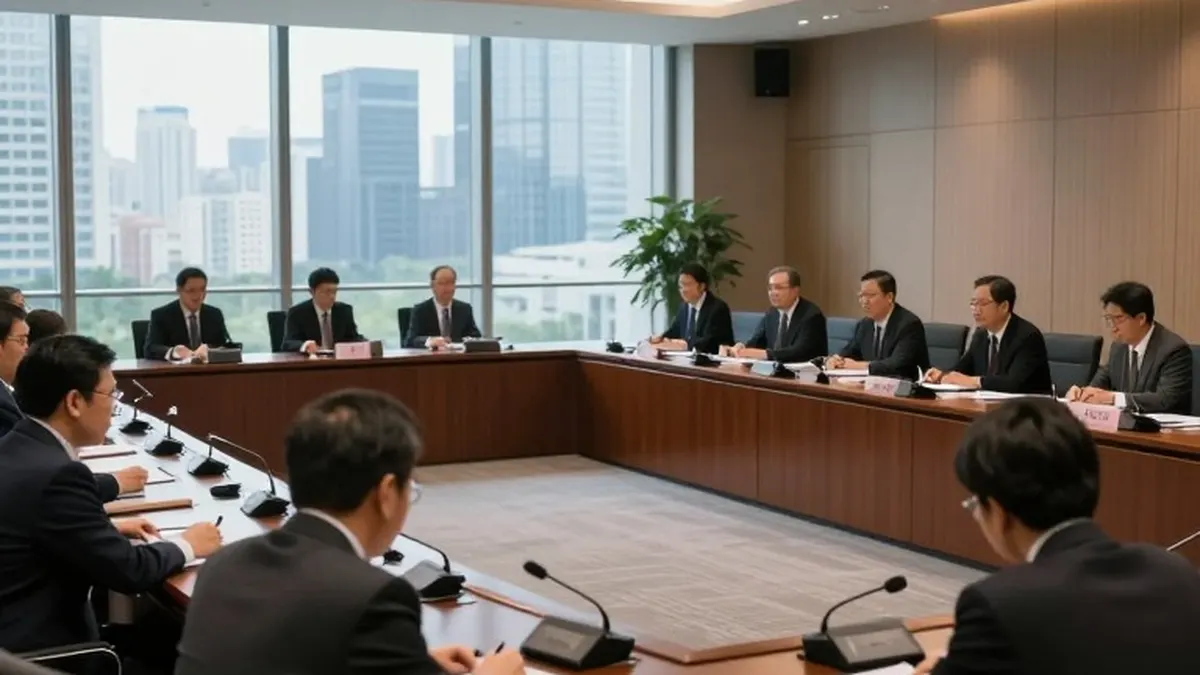
The world observed with great interest as the presidents of the United States, China, and Russia convened for a historic ninety minute trilateral summit in Shenzhen on Thursday. The meeting, which took place from November 18 to 19, marked a significant diplomatic event as the three leaders gathered in the city often referred to as China’s Silicon Valley. Each head of state arrived with distinct motivations, yet early reports suggested that Vladimir Putin may have left the negotiating table in a weaker position than his counterparts. Some media outlets characterized the experience for the Russian president as a form of humiliation.
US President Donald Trump received a warm welcome upon his arrival, a gesture that contrasted sharply with the reception afforded to Putin. Chinese President Xi Jinping personally greeted Trump at the airport and stood beside him for official photographs during the Asia Pacific Economic Cooperation summit and the opening banquet. In contrast, Putin was received by Cai Qi, a high ranking official in the Chinese Communist Party, rather than by Xi. For the official group photo, Putin was positioned next to Peng Liyuan, the wife of the Chinese president, while his seating arrangement at the banquet placed him opposite Liyuan and next to Indonesian President Prabowo Subianto.
These logistical decisions raised questions about the hierarchy within the group. Yuri Ushakov, an adviser to the Russian president, noted that the seating arrangement prevented Putin from easily conversing with Trump and Xi during the meal. On Thursday, Putin kept the other two leaders waiting for over an hour before joining the official opening of the summit. Jeff Hawn, a Russia specialist at the London School of Economics, commented that Putin has a history of arriving late in diplomatic situations when outcomes are not favorable to him.
Analysts have drawn comparisons between the dynamics of this meeting and the Yalta conference of 1945, where the major world leaders gathered to shape the postwar order. Natasha Lindstaedt, a specialist in authoritarian regimes at the University of Essex, described the interaction as resembling a gathering of a mafia family, where the leader makes it clear where others stand in the hierarchy. She emphasized that while authoritarian regimes cooperate, they often engage in subtle power struggles rather than treating each other as equals.
Western media and Russian opposition voices quickly highlighted the perceived snubs directed at Putin, with some calling it a diplomatic humiliation. Before the summit, Putin was frequently referred to as a dear friend of Xi, but the tone appeared to shift as talks began. Hawn suggested that China is increasingly frustrated with Russia’s ongoing conflict and its recent ceasefire proposal, which he described as leaving little room for compromise. This stance irritates China, whose primary goal remains increased economic growth.
By positioning himself prominently with Trump, Xi may have sought to establish his dominance as the key interlocutor for the US president. Some experts believe Xi is also frustrated by Russia’s growing closeness to North Korea. Lindstaedt noted that China wishes to maintain its influence over Pyongyang, a role that could be threatened by the military technological cooperation between Moscow and the North Korean government. This new alliance could provide Kim Jong un with an alternative political partner, reducing China’s leverage.
Other analysts offered a different perspective, suggesting that the elaborate welcome for Trump was intended to stroke the US president’s ego rather than to diminish Putin. Scott Lucas, a specialist in US affairs at the University of Dublin, argued that Putin’s presence was tactical, allowing him to demonstrate that he was not isolated and to maintain leverage in the Ukraine negotiations. In this view, the mere fact that the summit occurred represents a win for the Russian leader.
Richard Turcsanyi, programme director at the Central European Institute for Asian Studies, pointed out that Xi needed to keep a certain distance from Russia to project an image of a leader who is above the fray. He suggested that some media outlets may have exaggerated the humiliations suffered by Putin. For instance, reports that Trump was greeted with the US national anthem while Putin heard a ballet piece were based on the playing of America the Beautiful, which is not the official national anthem. Turcsanyi also noted that it is not standard protocol for Xi to meet foreign leaders at the airport, and his greeting of Trump was likely a reciprocal gesture for a previous welcome in the United States.