Swiss Documentary Explores Life in a Bulgarian Town Defined by a Massive Arms Factory
Gabriel Tejedor's new film, The Big Boom!, examines the complex relationship between residents of Kazanlak and the Arsenal weapons plant that supplies ammunition to Ukraine.
By Malik Popov ·
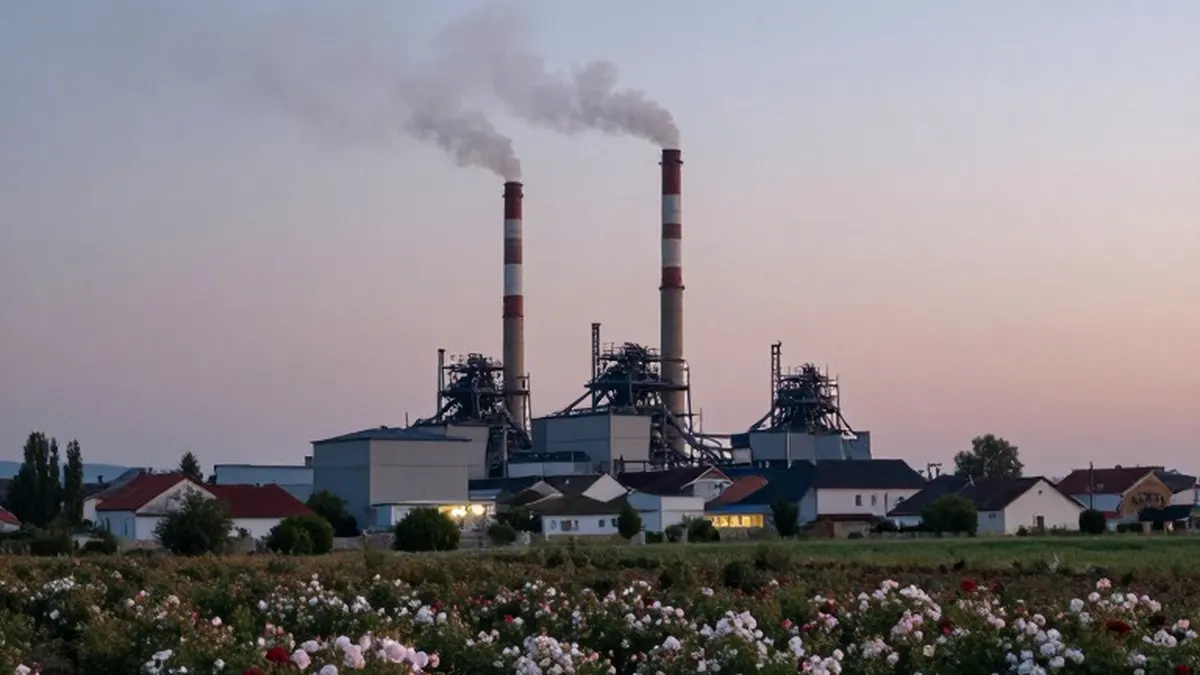
The Big Boom!, a new documentary by Swiss filmmaker Gabriel Tejedor, has been selected for the IDFA Frontlight section. The film, which is Tejedor's fifth feature, centers on the town of Kazanlak in Bulgaria, a region traditionally known as the Valley of Roses. In this setting, the tranquil rural landscape is frequently interrupted by the loud sounds of explosions from the nearby Arsenal factory. This industrial facility employs more than 10,000 people and manufactures weapons and ammunition that are largely transported to the frontlines in Ukraine, a distance of only a few miles from the town.
The documentary explores the central dilemma faced by local residents: how to balance the economic security provided by a multi-billion dollar defense industry with the moral weight of supporting a brutal war. The conflict has devastated lives and communities, yet the factory offers stable employment. One resident in the film notes the irony of the situation, stating, "It's sad to say but thanks to this war we live very well." Another resident emphasizes the practical benefits, explaining that the factory guarantees job security and peace of mind. These sentiments are contrasted by a group of pacifists who recently staged a protest against a monument honoring a historical figure linked to the deaths of thousands of Bulgarians.
Given the deep historical and cultural ties between Kazanlak and Russia, many locals harbor mixed feelings about their work. The film follows four specific individuals whose lives are shaped by the looming presence of the factory. One protagonist is a current factory worker who takes pride in her craft and feels empowered as she refines her shooting skills. Another is a former employee who became a pacifist journalist decades after leaving the plant and now challenges prevailing views on the war. The narrative also includes a Ukrainian refugee and his daughter, who are rebuilding their lives in Kazanlak while processing the trauma of their loss. Finally, the film features a Roma grandmother whose family history carries the painful memories and lingering consequences of the factory's past.
Lightdox acquired world sales rights to the documentary in October. The production is led by Mira Film Basel GmbH, with Susanna Guggenberger serving as producer. Co-production partners include RTS Radio Television Suisse and SRG SSR. The project also received support from various Swiss and regional film funds and cultural institutions.
Tejedor discussed his own evolving perspective on pacifism while working on the film. Growing up in Switzerland, a country where neutrality is a core part of national identity, he had never experienced war in close proximity until the conflict in Ukraine began. He noted that Ukraine is only a few hundred kilometers away from Switzerland, making the situation feel personal. In Bulgaria, he found that identifying as a pacifist could be interpreted as being pro-Russian or wanting to maintain the status quo. This realization prompted him to question his own understanding of the concept. He stated that the film looks beyond Ukraine to a global scale, addressing the future world we will inhabit and the looming threat of a third world war.
The filmmaker also reflected on the integration of the arms industry into daily life in Kazanlak. While initially struck by the contrast between the famous rose fields and the heavy industry, Tejedor came to see that the factory is not separate from the town's identity. It shapes the local economy, history, and culture. Weapons are visible in shooting ranges, arms fairs, and military events. However, the town does not fully embrace its reputation as an arms hub, often using its rose heritage to soften its image. Tejedor became drawn to this coexistence, viewing the factory as a central element of community life rather than just a production site.
In selecting his four protagonists, Tejedor aimed to present a wide range of viewpoints without judging their positions. Some characters are enthusiastic about weapons, while others are pacifists. Some view their work at Arsenal as a way to afford leisure, such as seaside holidays, while others describe it as a form of prostitution. Some hold fatalistic views, believing that human conflict is inevitable. The filmmaker wanted to ask the audience to consider their own stance on weapons in a town where the industry permeates schools and cultural life, making it difficult to simply refuse participation.
Tejedor also questioned his own role in the conflict throughout the filmmaking process. He realized that his actions, such as buying Russian products for oil, gas, and wheat, or living in a country that manufactures weapons, connected him to the war. He argued that Europe must develop renewable energies to stop funding the Russian state and that sanctions should target anyone aiding the Russian military complex, not just citizens of Russia and Belarus. This perspective shifted his view of pacifism, acknowledging that while weapons are not the only answer, they currently play a necessary role in defense.
More News · National news · Report a business · Got a Story?