Michigan Rivers Struggle as State Lacks Staff, Uniform Septic Rules, and Funding
Three-quarters of Michigan waterways contain excess fecal bacteria, prompting a debate over regulatory gaps and budget priorities.
By Malik Popov ·
Approximately 75% of Michigan's rivers and streams contain levels of fecal pollution that exceed safety limits for swimmers and anglers. The state faces a convergence of regulatory gaps, staffing shortages, and infrastructure deficits that have allowed the problem to persist.
Michigan is the only state without a uniform statewide sanitary code for septic systems. Local regulations vary and are often loosely enforced, leaving an estimated 330,000 failing septic systems to pollute waterways with minimal oversight. Water advocates, including Liz Kirkwood of Flow Water Advocates, argue that a statewide code with mandatory inspections is necessary. Kirkwood stated, "Here you go. We're the 50th state." Bills to adopt such a code have stalled due to disagreements over inspection timelines and repair costs.
The Michigan Department of Environment, Great Lakes and Energy employs more than 1,600 people, yet only one staff member is dedicated full-time to monitoring rivers for E. coli. Enforcement of manure pollution rules at large livestock farms is handled by just seven part-time employees, even as the number of such farms has tripled in recent decades. Environmental groups contend this thin staffing hinders effective investigation, while Republican lawmakers have moved to cut agency budgets and reduce staff, viewing current regulations as overly burdensome.
Agricultural runoff remains the leading source of river pollution in the United States, according to the EPA. In Michigan, the state relies largely on voluntary measures to control diffuse runoff from fields. Large livestock farms require permits to operate, but environmentalists and regulators say the current terms are too weak. Eric Dennis, a research associate at the Citizens Research Council, suggested the state rethink its approach entirely rather than tweaking a permit system that many view as ineffective. Dennis said, "We need to find a better way to do this."
Aging combined sewer systems in core cities overflow during heavy rain, releasing untreated water into local streams. Cities have been under orders to update these systems for decades but lack the funds to complete the work. The state allocates $200 million annually in non-federal dollars for water infrastructure, a fraction of the $5 billion spent on roads. Federal funding for these projects has declined, and state legislators have not fully closed the gap. A current proposal would impose a 25-cent-per-gallon royalty on bottled water companies to help fund these initiatives.
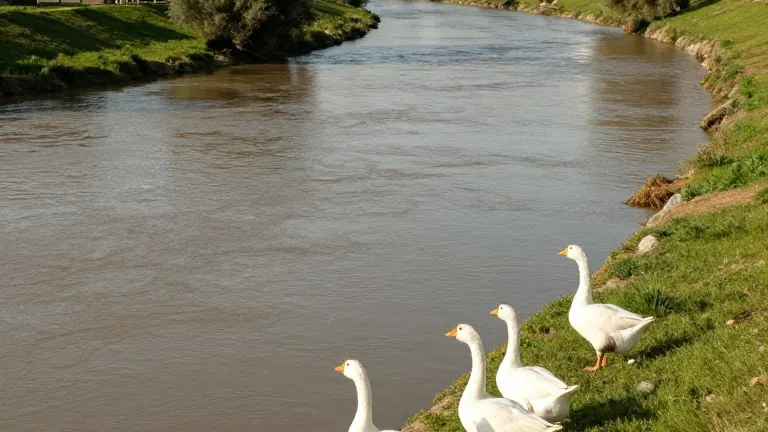
Personal responsibility also plays a role in water quality. Michigan has 2.4 million dogs, and experts say insufficient cleanup of pet waste contributes to pollution. Urban development has replaced wetlands with grassy lawns, creating ideal conditions for geese and ducks to congregate near waterways. Their droppings easily run off into streams. Rachel Cuschieri-Murray, executive director of the Eaton Conservation District, emphasized the need for education on the personal connection to local water. She noted, "Education is a big piece of the puzzle."
Residents can reduce their impact by picking up pet waste and replacing turfgrass with native plants near water. Those with malfunctioning septic systems or illicit sewer connections should repair them promptly. While the state has cleaned up industrial pollution in the past, such as on the Rouge and Kalamazoo rivers, current efforts are focused on managing diffuse sources of fecal contamination.