Israel extends David's Sling range to handle prolonged missile threats
Upgrades to the middle tier of Israel's air defense network aim to reduce reliance on costly interceptors and ensure durability during extended conflicts.
By Malik Popov ·
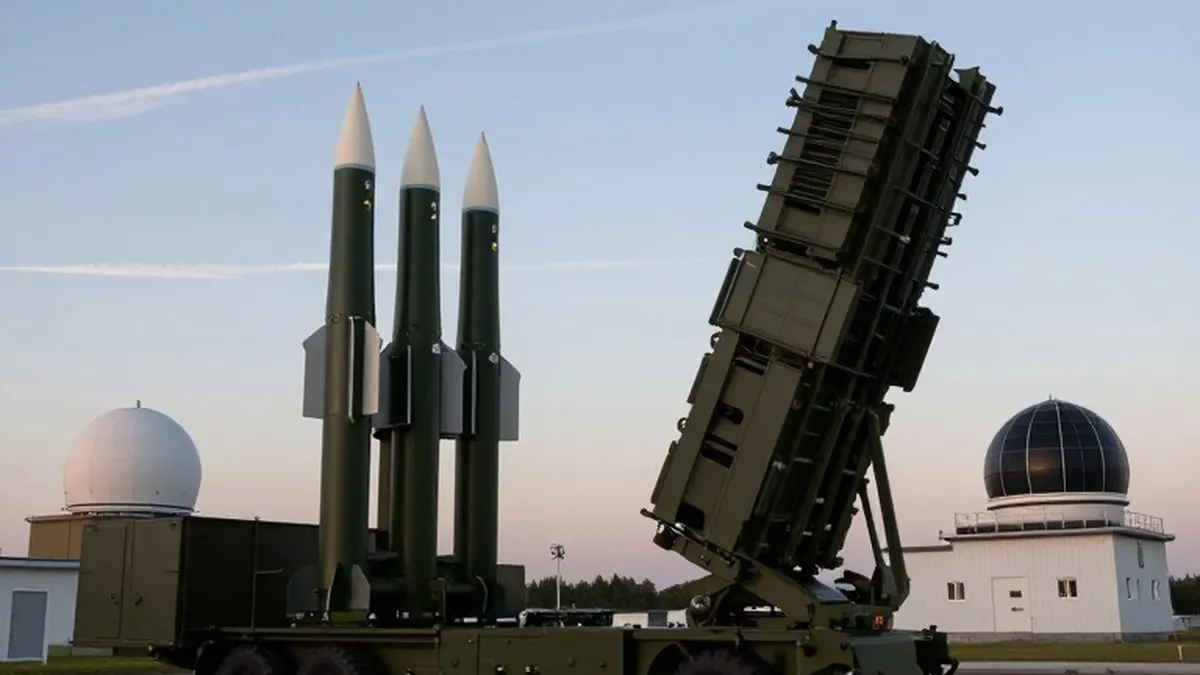
Israel has completed significant upgrades to its David's Sling air defense system, a move designed to extend the system's interception range and improve its overall effectiveness. According to a report published by Bloomberg on Friday, these enhancements were prompted by lessons learned during the recent war with Iran. That conflict highlighted a critical vulnerability in the country's defense strategy, specifically its heavy dependence on expensive missile interceptors that are challenging to manufacture in large quantities.
The modifications target the middle tier of Israel's multilayered air defense architecture. The primary goal is to broaden the system's capacity to counter ballistic missile threats while ensuring that defensive operations can be sustained over longer periods. This is particularly important for scenarios involving prolonged attacks that could stretch the limits of current stockpiles.
A senior official from the Israel Air Force, who leads air defense investigations, confirmed the improvements to Bloomberg. The official, who spoke on condition of anonymity in accordance with air force policy, stated that the upgraded system now allows Israel to counter a wider array of ballistic missile threats. Crucially, the official noted that the country is now better positioned to withstand weeks of sustained aerial bombardment without exhausting its defensive resources.
David's Sling occupies a specific niche in Israel's layered defense network, operating between the Iron Dome and the Arrow systems. It is specifically designed to intercept heavy missiles and drones. The recent upgrades are a direct response to the operational threats encountered during the conflict with Iran, reflecting a broader strategic shift toward strengthening interception capabilities across all layers of the defense grid.
These technical improvements arrive at a time when concerns about interceptor availability and production capacity remain prominent. The Jerusalem Post has previously reported on the significant strain placed on Israel's missile defense stockpiles during the war with Iran. Those earlier reports detailed the logistical challenges associated with maintaining sufficient supplies of interceptors to meet the demands of a high-intensity conflict.
The current upgrades represent the latest step in a broader effort to reinforce the integrity of Israel's multilayered missile defenses. Previous initiatives have included operational testing of the system and efforts to expand the industrial base responsible for producing interceptors. The focus is now on creating a more resilient and cost-effective defense ecosystem that can handle modern threats.
Uzi Rubin, an analyst at the Jerusalem Institute for Strategy and Security who oversaw the development of Israel's first national defense shield, provided context on the changing nature of air defense. Speaking to Bloomberg, Rubin explained that earlier generations of kinetic technical missile defense were designed to handle a limited number of threats. He noted that the modern battlefield presents a very different challenge, with hundreds or thousands of incoming projectiles potentially targeting a single nation.
Rubin emphasized the need for economic efficiency in future defense solutions. He stated that the industry must now develop cheaper kinetic kill missiles to keep pace with the volume of threats. This shift underscores a move away from purely high-cost interceptors toward a more balanced approach that combines advanced technology with sustainable production capabilities.
The integration of these new capabilities is expected to bolster Israel's strategic posture against regional adversaries. By extending the range and endurance of the David's Sling, the country aims to close potential gaps in its defensive coverage. This ensures that even in the face of massive, coordinated attacks, the air defense network can maintain continuous operation without critical breakdowns in performance or supply.
As the geopolitical landscape continues to evolve, the emphasis on cost-effective and scalable defense solutions is likely to grow. The upgrades to David's Sling serve as a practical example of how military technology is being adapted to meet the demands of modern warfare, where the scale and speed of attacks require robust and durable defensive responses.