Golshifteh Farahani Criticizes Hollywood Propaganda at Tallinn Film Festival
At the Black Nights Film Festival, the Iranian actor discussed the burden of political representation and the distortion of Middle Eastern narratives in Western cinema.
By Riya Zielinski ·
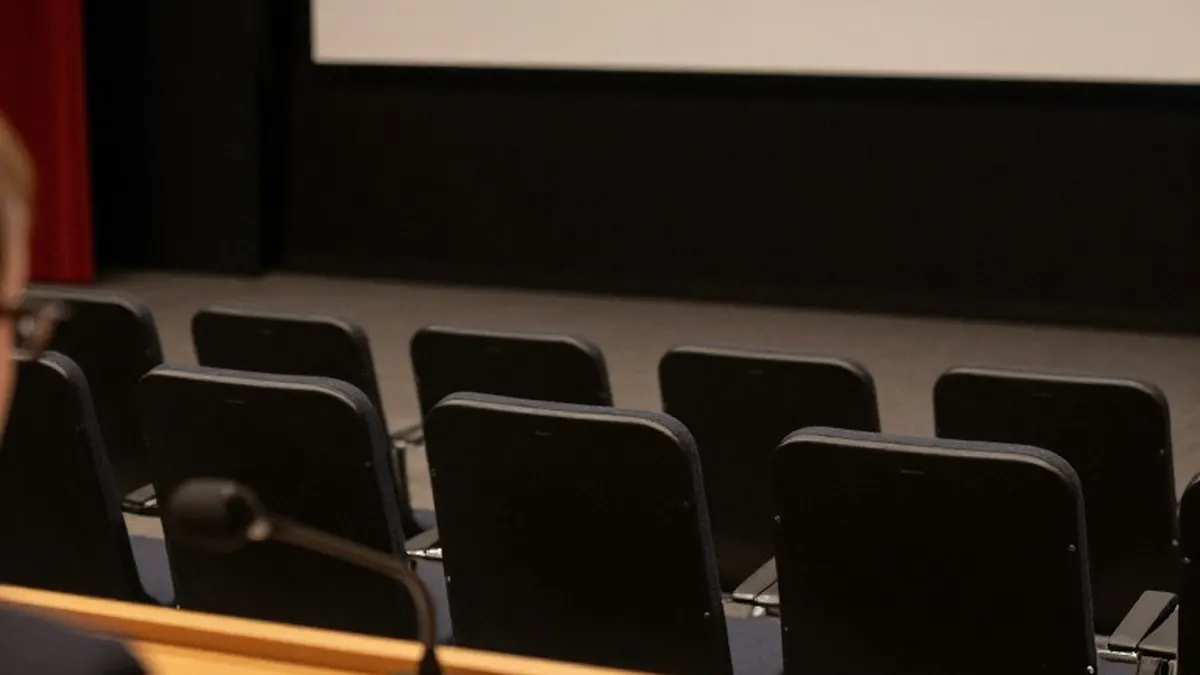
Iranian-born actress Golshifteh Farahani offered a sharp critique of Western media narratives during a panel discussion at the Black Nights Film Festival in Tallinn. Speaking on Thursday, she addressed the frequent questions about geopolitics that follow her due to her nationality, arguing that such inquiries place an unfair burden on artists from regions in conflict. Farahani, who is in Estonia to promote her film When She Hears the Bells, expressed her frustration with the polarized nature of current political discourse.
The discussion took place during a session titled Women, War and Witness: Cinema in Times of Global Crisis. Moderator Ahmed Sahwky, an Egyptian journalist, asked Farahani if she felt torn between focusing on her craft and representing her home country in the media. Farahani responded by comparing her experience to that of Western celebrities, noting that stars like Julia Roberts or Jennifer Lawrence do not constantly field questions about U.S. politics, nor does Marion Cotillard face constant inquiries about Marine Le Pen.
She described the current political landscape as binary, stating that existing in the middle is often seen as dangerous. According to Farahani, harmony is derived from this middle ground, yet artists are frequently forced into a box where they must choose a side. This sentiment was echoed by Halkawt Mustafa, a Norwegian-Kurdish filmmaker sitting alongside her. Mustafa, whose film No Paradise If You Are Killed By a Woman is Iraq’s Oscar contender, noted that he is often asked which flag he represents, whether Kurdish, Iraqi, or Norwegian. He emphasized that his primary goal was to portray the specific perspective of a Kurdish Peshmerga sniper.
Farahani, who has lived in exile in France for two decades, said she enjoys portraying women from the region, including Yazidi, Kurdish, Afghan, and Lebanese characters. She connected this to her personal history, feeling the suffering caused by the region’s resources. However, she warned that coming from a country at war can strip an individual of their personal identity, turning them into a representative or flagship for their nation.
The actress highlighted the prejudice she has faced since leaving Iran in 2008. That departure followed a local backlash against her appearance in Ridley Scott’s Body of Lies. Upon arriving in the West during the Bush administration, she found that most roles offered to her involved terrorists or underground parties in Tehran. She rejected these stereotypical parts despite financial pressures, stating that Hollywood’s depiction of the Middle East is often absolute propaganda from both the U.S. and Iran.
When asked about self-censorship, Farahani pointed to U.S. studios as the primary drivers of these narratives. She argued that white supremacy in Hollywood leads to the rewriting of history, with studios deciding which stories receive funding. To counter this, panelist Mariia Vynogradova of Talented U stated that her organization provides a platform for filmmakers from war zones to be heard. Her co-founder Ksenia Bugrimova added that major festivals and producers must do more than just host films; they should actively help these filmmakers spread their messages against war.
The event also marked the launch of the inaugural Free World Award. Festival director Tiina Lokk signed a memorandum with Andrii Osipov of the Ukrainian Film Agency to establish the prize. The award recognizes cinema that champions freedom and human rights. The first recipient will be No Paradise If You Are Killed By a Woman, which Osipov described as a deeply moving work that highlights violence against civilians in Mosul.
This initiative strengthens ties between Ukrainian, Estonian, and international film professionals. PÖFF has been a key supporter of Ukrainian cinema since Russia’s invasion in 2022. In recognition of her efforts, Lokk will receive Ukraine’s Order of Princess Olga, Third Class, at the festival’s closing ceremony.
More News · National news · Report a business · Got a Story?