Fiona's passing offers families a chance to discuss grief and life
The death of the Cincinnati Zoo's hippopotamus is helping parents teach children about loss and emotional processing.
By Malik Popov ·
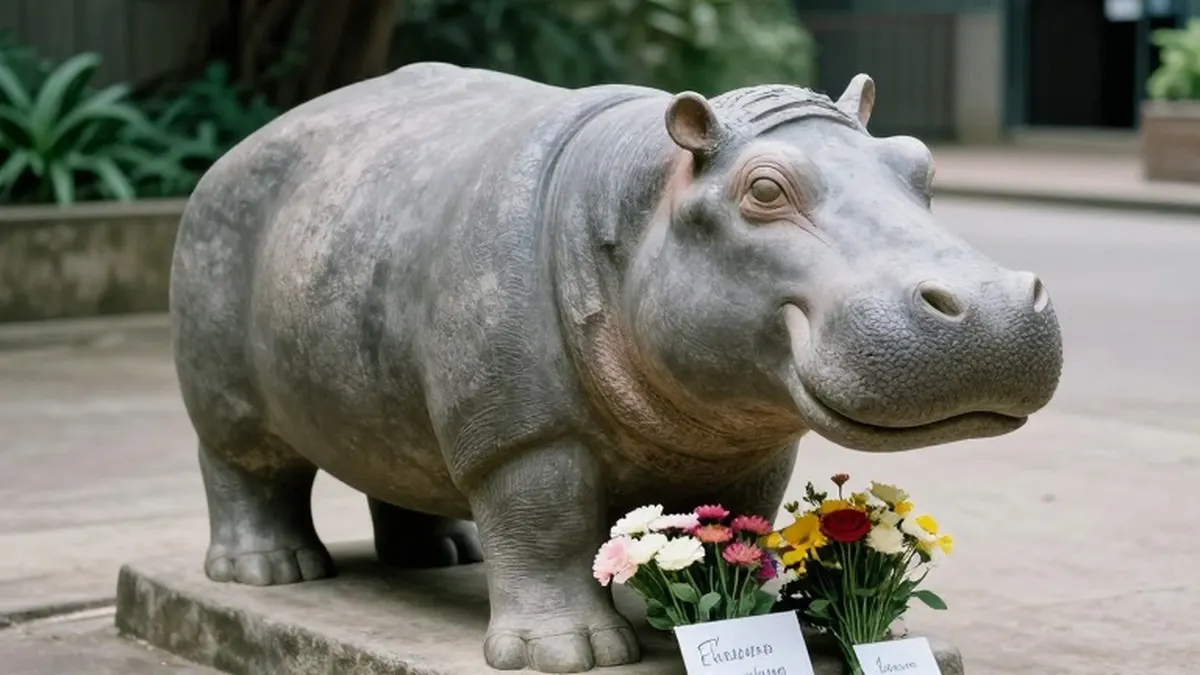
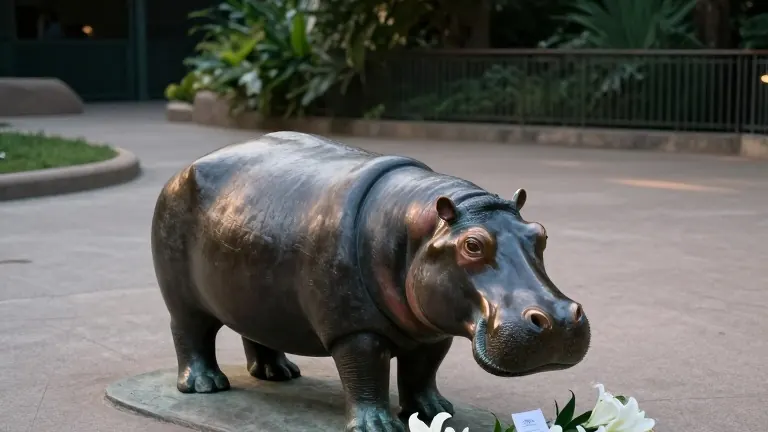
The Cincinnati Zoo has mourned the loss of Fiona, a nine-year-old Nile hippopotamus who was widely beloved by visitors and animal lovers alike. The animal died on Thursday following complications related to a knit hat that had been accidentally thrown into her enclosure. Her passing has triggered a wave of tribute from across the country, with many fans leaving flowers and handwritten notes near the statue located outside the zoo's entrance.
For many young children, Fiona's death represents their first significant experience with the loss of an animal they have come to adore, even if they never had the opportunity to meet her in person. This event is providing parents with a meaningful opportunity to guide their children through the complexities of grief and to help them understand the concept of mortality.
Samantha Haines, a mother from St. Petersburg, Florida, initially withheld the news of the incident from her ten-year-old daughter, who has a particular fondness for hippos. Haines explained that she did not want to worry her child prematurely. However, she decided to share the news of Fiona's death on Thursday. The pair spent about twenty minutes crying together before Haines encouraged her daughter to place her Fiona-themed ornaments on the Christmas tree in her bedroom. The child then became distracted by a book about dragons and seemed content to move on for the time being.
Haines noted that her daughter likely needs a distraction at this stage. The family has recently experienced the death of a family member, meaning they are already navigating the emotional ups and downs of the grieving process. This personal context highlights how the loss of a public animal can intersect with private family grief.
Grief specialists and psychologists advise caregivers to use clear and age-appropriate language when explaining such events. Experts suggest avoiding euphemisms like saying an animal has gone to sleep, as this phrasing can sometimes confuse or frighten younger children. It is important to state plainly that the animal has died and will not be returning.
Parents do not need to have all the answers when discussing death with their children. Acknowledging uncertainty and creating space for questions allows kids to feel comfortable expressing their feelings. Caregivers are also encouraged to share their own sadness, as there is no single correct way to grieve. Children often require time and repeated conversations to fully process a loss.
Deirdra Flavin, the CEO of the National Alliance for Children's Grief, has previously emphasized the importance of open dialogue. She noted that people often avoid talking about death, yet it is a guaranteed part of life. Being open about these topics helps normalize the experience for children.
Kaitlyn Hermsen, a mother of four from Oconomowoc, Wisconsin, shared her family's connection to the hippo. Her eight-year-old daughter was deeply attached to Fiona's story, partly because they were close in age. The family even traveled from Wisconsin to Cincinnati to see the animal. Hermsen described the conversation about Fiona's death as heartbreaking, though her daughter found some comfort in imagining that Fiona is now in heaven with the family dog and a favorite cow.
Online communities have also been active, with comments flooding a Facebook fan page dedicated to Fiona. The messages reflect a mix of sadness and frustration. Some users have urged others not to direct their anger at the specific family whose hat ended up in the enclosure, while others have shared happy memories of their visits. Remembering Fiona through drawings, photos, or stories can help children find closure and understand that death is a permanent but natural part of life.
More News · National news · Report a business · Got a Story?