Christie's Pauses Frida Kahlo Auction Following Provenance Inquiry from Mexico
A New York auction house withdrew a 1952 Frida Kahlo painting at the request of Mexican authorities seeking clarification on its history and export status.
By Tyler Wood ·
The prestigious auction house Christie's has temporarily removed a significant work by Frida Kahlo from its upcoming sales program in New York. The decision to pause the sale was made in response to a request from Mexican officials who sought additional details regarding the painting's provenance. This development was confirmed by a spokesperson for the auction house on Thursday.
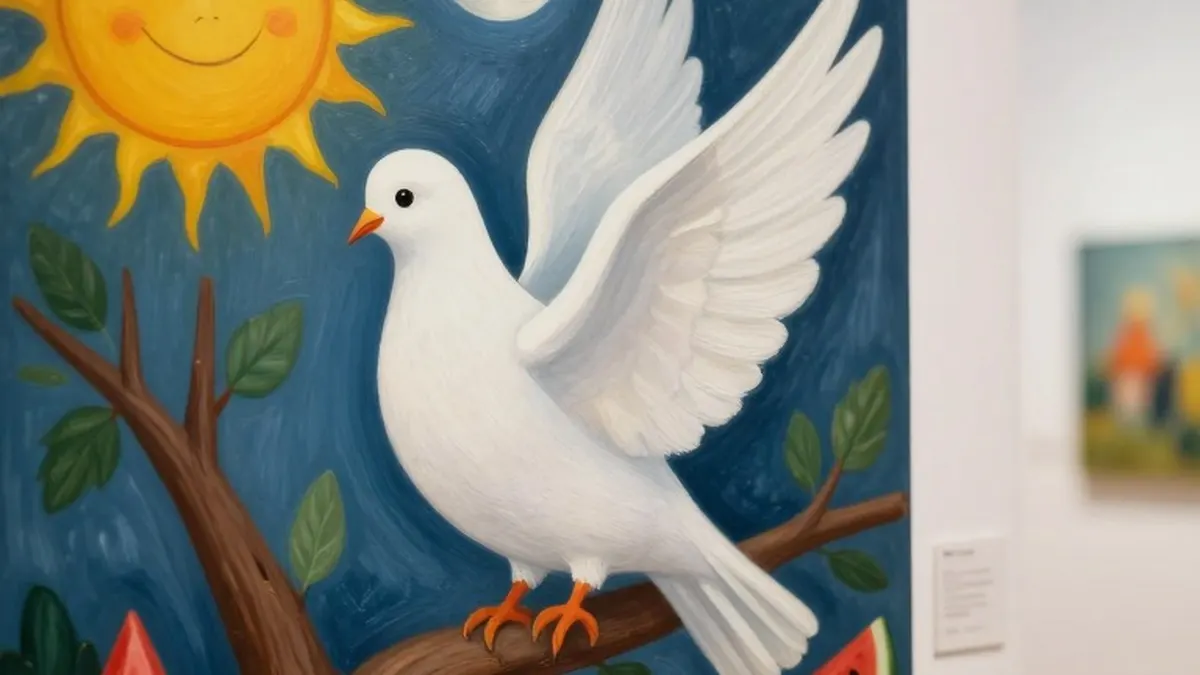
The specific artwork in question is titled 'Congreso de los pueblos por la paz,' which translates to 'Congress of the Peoples for Peace.' The piece was originally scheduled to go under the hammer on Tuesday. The painting features a whimsical and surreal composition that includes a white dove perched on a fruit-laden tree, accompanied by a smiling sun, the moon, and two slices of watermelon.
Mexican authorities cited a national declaration that classifies Frida Kahlo's creations as artistic monuments of the country when they asked for the sale to be held. This legal framework protects her works under federal laws governing archaeological, artistic, and historical sites. The government indicated that it was coordinating its efforts with the Diego Rivera and Frida Kahlo Museums Trust, which is administered by the Bank of Mexico.
A representative for Christie's explained the strategic decision in a written statement. 'In collaboration with the seller, we decided to withdraw the lot at this time for further research,' the spokesperson said in an email to The Associated Press. The auction house expressed its intention to offer the work for sale again in the future once the necessary investigations are complete.
The painting was created by Kahlo in October 1952. At that time, the artist was suffering from serious health complications. She entrusted the work to her husband, the renowned painter Diego Rivera, who transported it to the World Peace Council's peace congress held in Vienna that same year. Kahlo passed away in Mexico City two years after completing the piece.
The journey of the painting to Austria is documented in the memoirs of Emma Hurtado, who was Rivera's final wife. The trip has also been referenced by art historians, including Raquel Tibol, adding to the historical record of the artwork's movement.
The legal nuance of the case lies in the timing of the export. The painting left Mexico more than three decades before the 1984 decree that officially designated Kahlo's work as an artistic monument. This decree prohibits the permanent export of her works that were physically present in Mexico at the time of its publication, a provision that may not strictly apply to this specific piece given its earlier departure.
Interestingly, the same painting was previously sold at auction by Sotheby's in 2020 without raising any objections from Mexican authorities. This prior transaction adds a layer of complexity to the current inquiry, as the work has a history of successful international sales.
Frida Kahlo continues to command extraordinary attention in the global art market. Last year, her 1940 self-portrait titled 'El sueño (La cama),' also known as 'The Dream (The Bed),' achieved a sale price of $54.7 million. That transaction established a new auction record for a work created by a female artist, underscoring the enduring value and high demand for her legacy.
More News · National news · Report a business · Got a Story?