Nine-Month-Old Infant Dies of Hypothermia in Gaza as Winter Begins
A baby in southern Gaza died from cold exposure, marking the first hypothermia death of the season as displaced families struggle with flooding and inadequate shelter.
By Tyler Wood ·
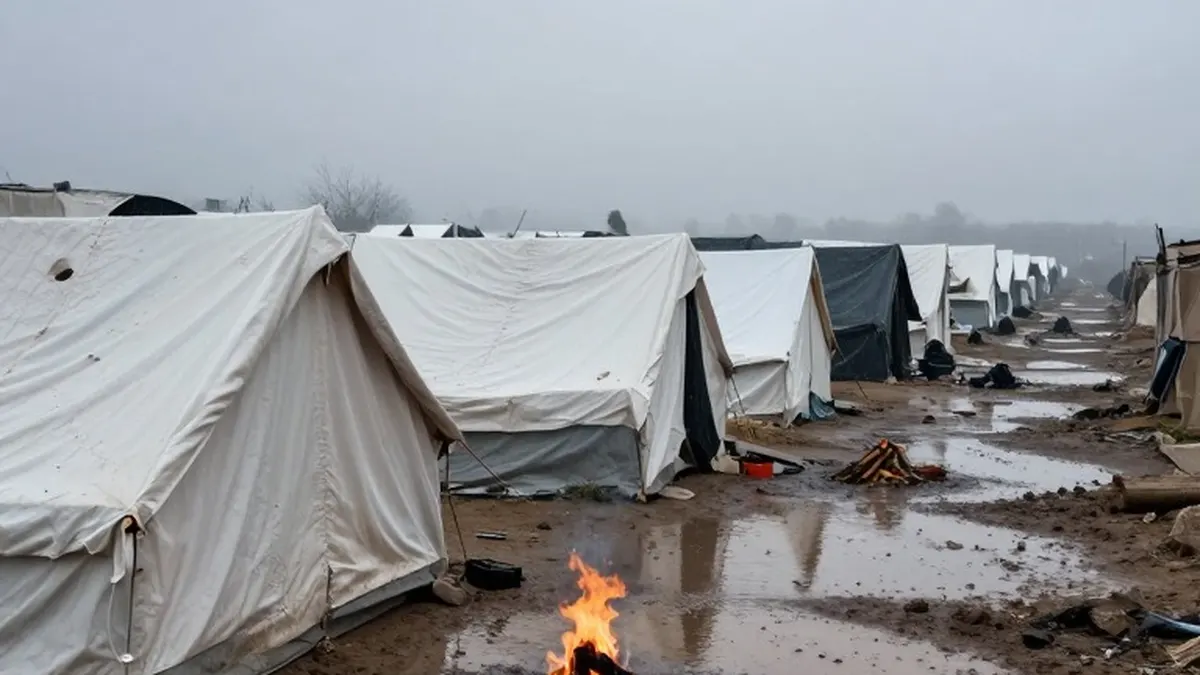
Ahmed Arqiq, 37, walked through a gathering of mourners in southern Gaza, carrying the body of his nine-month-old son, Kinan. The infant was wrapped in a white blanket as Arqiq whispered prayers and accepted condolences from passersby. The death occurred after the family rushed the baby to the Kuwait Specialty Hospital in Khan Younis at 4 a.m. on the day prior, but medical staff determined it was too late to save him.
Arqiq recounted the events to CBC News, explaining that the infant had been wrapped up but was soaked in water. He described how the baby's head, clothing, and pants were all wet. Kinan was the youngest of three children in the family, which has been living in a makeshift tent since being displaced from their home in 2023.
Dr. Jamal Al-Hams, the medical director at the Kuwaiti Hospital, confirmed that the infant arrived at the facility already deceased. He stated that the child had no underlying medical conditions and that the cause of death was the severe cold weather exposure within the family's tent. The doctor noted that the baby was living in very bad conditions, which contributed to the fatal outcome.
The death is the first recorded case of hypothermia in Gaza this season. In the week leading up to the incident, heavy rains flooded parts of the enclave, leaving residents stuck in water with their belongings drenched. For the Arqiq family, the soaking of blankets and clothing prevented them from keeping the infant warm. Temperatures in Gaza can drop significantly at night during winter, often hovering between eight and ten degrees Celsius, or falling as low as seven degrees.
Shaun Hughes, the UN World Food Programme country director for Palestine, issued a press release on Tuesday describing a deepening crisis in shelter, sanitation, and food security. He noted that winter rains are flooding makeshift shelters and destroying scarce food supplies. A UN report from February 2026 highlighted that at least 11 children had died of hypothermia that winter, emphasizing the deadly impact of cold exposure without adequate shelter.
The current situation follows the war that began in October 2023 after a Hamas-led attack on Israel. According to the Gaza Health Ministry, more than 74,000 Palestinians have been killed since the conflict started. Although a fragile ceasefire is now in place, humanitarian groups indicate that demand for aid still outstrips supply. Hughes observed that the Israeli military still controls about 70 percent of the Gaza Strip, which limits local food production and makes fishing risky due to gunfire.
The Israeli military's Co-ordination of Government Activities in the Territories announced last week that more than 93,000 tents and 8,600 trucks carrying winter supplies have entered Gaza as part of a winterization plan. However, aid organizations argue these measures are insufficient. Karl Baker, head of the UN International Organization for Migration's Gaza programme, warned that without proper shelter and critical relief items, hypothermia deaths will continue. He pointed out that children are particularly vulnerable because they lose body heat more quickly.
Baker also noted that aid delivery has been hindered by lengthy security checks and crossing closures. He described Gaza as turning into one large camp for internally displaced persons, ranking it among the worst situations he has witnessed. Back at the hospital, Arqiq carried his son to the courtyard for a funeral prayer. The shrouded body lay on a coat on the ground as family and friends lined up to pray before the infant was taken to his grave.
"He was like a flower," Arqiq said, with tears rolling down his cheeks as he spoke about his son.