Army delays lead detonation in Iowa after legislative criticism
Acting Army Secretary Adam Telle postponed a planned controlled explosion of unstable lead azide barrels in Iowa to Monday, citing the need for better communication with local officials and residents.
By Malik Popov ·
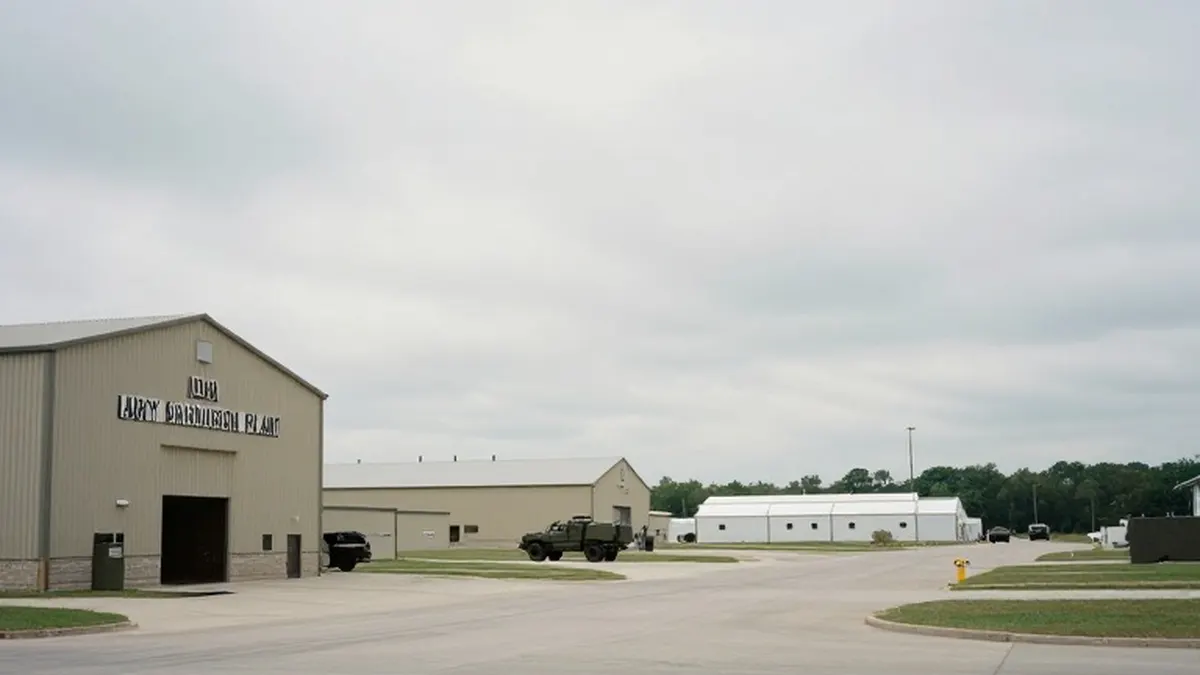
Acting Army Secretary Adam Telle announced on November 19 that the military would postpone the scheduled detonation of lead azide barrels at the Iowa Army Ammunition Plant in Middletown. The original plan was to conduct the controlled explosion on Friday, but the decision was made following significant pushback from state lawmakers who argued that the public and local officials received insufficient notice of the operation.
Telle communicated the change via social media, stating that public safety remains the highest priority for the Army. He directed the Army Materiel Command to move the detonation to Monday, November 23. According to the acting secretary, this new date represents the latest possible moment to act before a forecasted drop in temperatures could further destabilize the lead azide, a compound commonly used as an explosive for secondary bombs.
The military stated that the unstable material was first identified in March. Since that discovery, Army personnel have worked with stakeholders and the public in Middletown and the modeled impact area to explain the potential dangers. Telle noted that after coordination with the Environmental Protection Agency, experts, and the local community, a controlled detonation was determined to be the option posing the lowest risk to the public in the immediate and surrounding areas.
The Army had initially announced the detonation in a press release dated November 15. That notice requested nearby residents to vacate the area from 8 a.m. to 2 p.m. local time on Friday. The release warned that while safety measures would be fully enforced, the explosion would cause temporary noise, ground vibrations, and a dust plume containing some lead. Residents in Middletown were advised to expect a loud noise, vibrations from two consecutive rapid detonations, and a visible plume of dust.
Criticism of the process came from several Iowa political figures. Governor-elect Rob Sand, a Democrat, expressed that an unacceptable lack of communication and clarity had caused stress among Iowans regarding the situation. He emphasized the need for clearer information distribution to the public.
Senator-elect Josh Turek, also a Democrat from Iowa, described the situation as deeply troubling. He specifically pointed out that the Army had not provided prior notice to outgoing Governor Kim Reynolds, a Republican, or to other public officials. This lack of direct communication with state leadership became a focal point of the debate.
Outgoing Representative Ashley Hinson, a Republican from Iowa, shared a similar view. She remarked that the communities surrounding the ammunition plant were not given adequate notice of the planned explosions. Her comments highlighted the concern that local residents and leaders felt blindsided by the timeline.
In response to the criticism, Telle affirmed that the Army will continue to actively engage with state and local officials throughout the region. The goal is to distribute accurate and up-to-date information as the military prepares for the delayed detonation on Monday.
The postponement highlights the complex balance between military operational requirements and local community relations. By delaying the event, the Army aims to allow for further coordination while still adhering to the strict weather window required to safely manage the unstable lead azide.
More News · National news · Report a business · Got a Story?